Case price is the number that gets compared because it is the number that is easy to compare. It is also the number most likely to be wrong about which quote actually costs less.
Delivered cost is the real figure, and the gap between the two is where a lot of purchasing budget quietly disappears.
The components that move the number
Freight. Inbound freight is the most common hidden cost in supply purchasing. A quote that excludes freight is not a price, it is an estimate. LTL for bulky, low density product such as gloves, gowns, or janitorial supplies can add a meaningful percentage to a case, and the cost varies with lane, accessorials, and whether the receiving site needs a liftgate or an appointment.
Minimum order quantity. A low case price attached to a high minimum is not a low price if the excess sits in a storeroom for eight months. Carrying cost, storage space, and expiration risk on dated product all count.
Pack and unit quantity. Two cases of the same nominal product can contain different unit counts. Comparing case to case rather than unit to unit produces wrong answers routinely. Normalize to cost per unit of use before comparing anything.
Lead time and expediting. A quote with a six week lead time and a quote with in stock availability are not the same product offer. If the six week option forces one expedited shipment or one emergency buy at spot pricing, the savings are gone and then some.
Substitution and rejection risk. If an item arrives and the clinical team rejects it, the true cost includes the return, the delay, and the replacement purchase made under time pressure. Cheap product that does not get used is the most expensive product there is.
Payment terms. Net 30 versus prepay is a working capital difference. It is not usually the deciding factor, but on large orders it belongs in the comparison.
A simple comparison method
For each quote, compute:
Delivered cost per unit of use = (case price + allocated freight + expedite allowance) ÷ units per case
Then note two qualifiers next to that number: lead time in days, and whether the quantity is confirmed on hand or forecast. Those three data points side by side answer the question honestly.
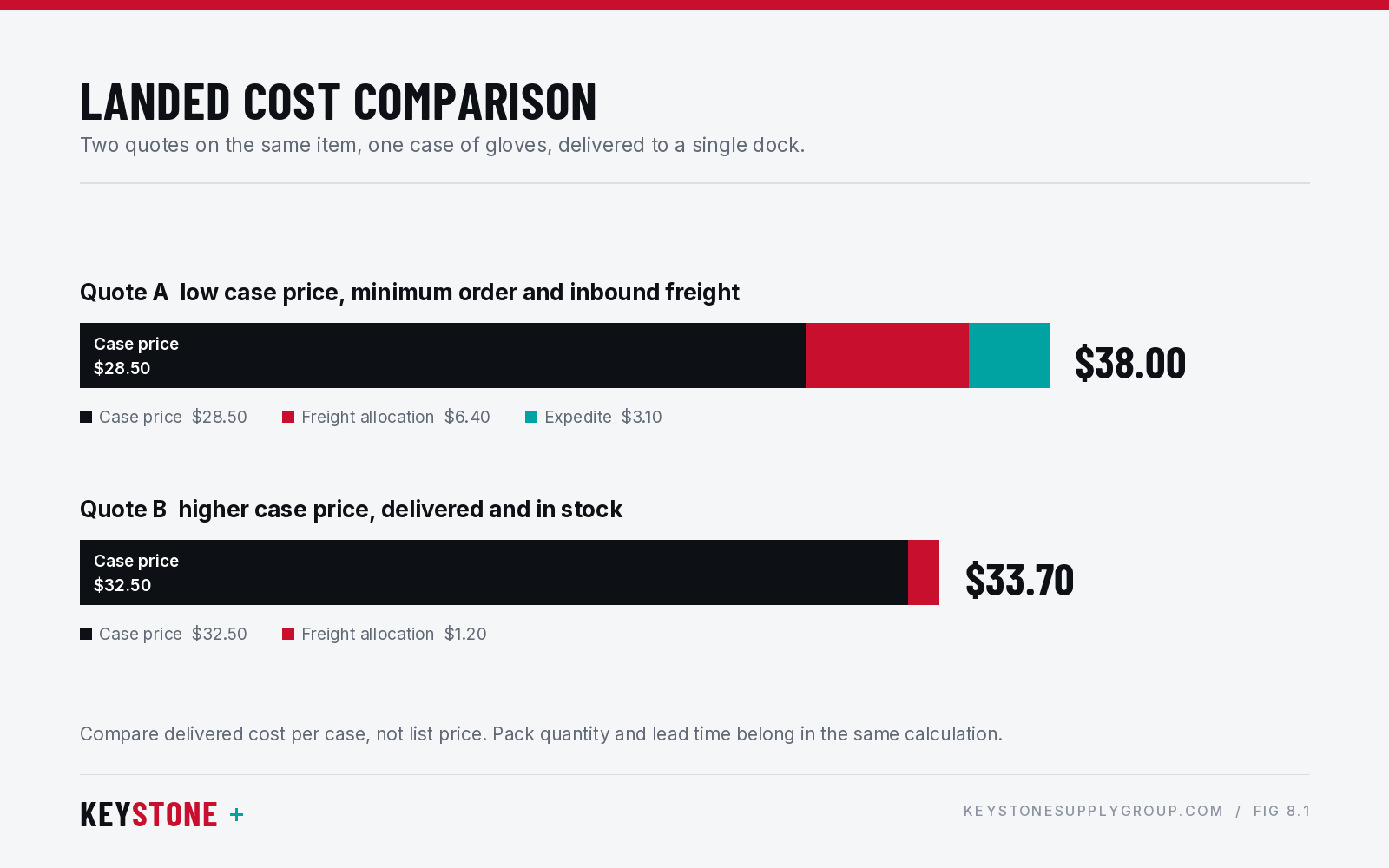
The example in the figure above is typical. A quote with a lower case price but inbound freight and an expedite requirement lands higher than a quote with a higher case price that ships delivered from stock. Nothing about the first quote was dishonest. It just was not complete.
Where buyers actually leave money
Ordering below freight break points. Many suppliers offer prepaid freight above a threshold. Ordering just under it repeatedly is one of the most common and most fixable cost leaks in purchasing. Consolidating two orders into one often pays for itself immediately.
Splitting an order across sites unnecessarily. Multiple small shipments to multiple docks multiply accessorial charges. Consolidating to one receiving point with internal redistribution is usually cheaper if the internal logistics exist.
Emergency buying on predictable items. Expedited freight and spot pricing on an item with steady, forecastable usage is a planning failure rather than a market condition.
Comparing against a contract price that is not available. If your contracted item is on allocation and cannot ship, the honest comparison for an alternate is against the cost of not having product, not against a price you cannot buy at today.
Ask for the delivered number
Keystone quotes delivered pricing with freight terms stated, lead time given honestly, and pack and unit quantities specified so comparisons are accurate. Where a lower price exists at a different pack configuration or order quantity, we will say so.
Request a delivered quote: Orders@KeystoneSupplyGroup.com | Office (507) 237-6036 | keystonesupplygroup.com