Every shortage feels unprecedented while it is happening. Looking back across six years, they are remarkably similar to one another.
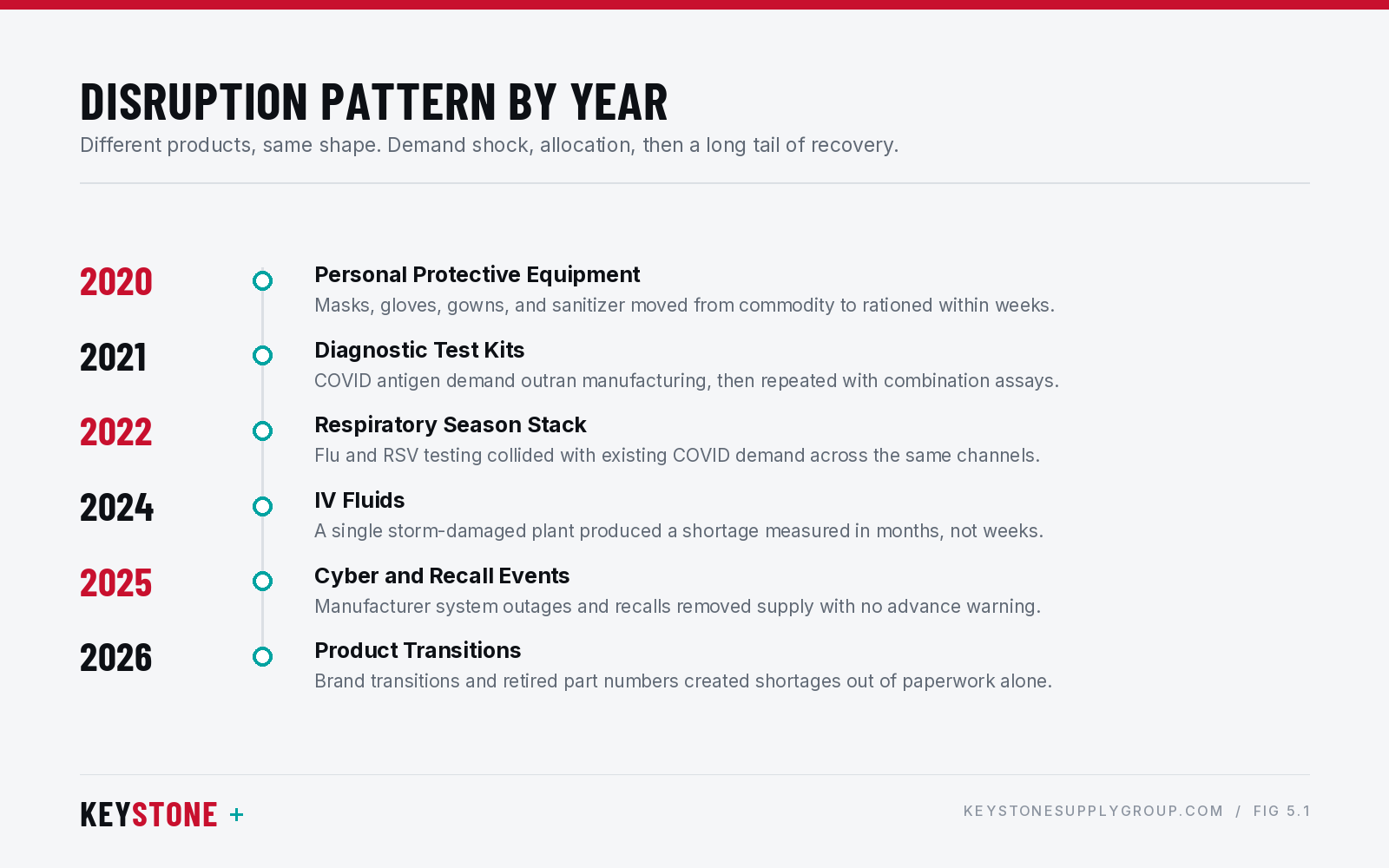
Different products, different causes, same shape: a demand shock or supply interruption, an allocation period where access is decided by purchase history rather than need, a scramble for alternates, and a long recovery tail during which pricing and availability slowly normalize. Recognizing that shape is what turns a reactive purchasing department into a prepared one.
The pattern in six chapters
Personal protective equipment. Masks, gloves, gowns, and sanitizer moved from commodity items to rationed items in a matter of weeks. Organizations that had never thought about glove sourcing suddenly had executives involved in it. The lesson was that commodity status is not permanent, and the products least worth thinking about in normal conditions are often the ones that fail first.
Diagnostic test kits. Antigen test demand outran manufacturing capacity, then the same dynamic repeated as combination assays entered the market. Buyers learned that assay format matters, that shelf dating is a real constraint on stockpiling, and that a product with regulatory requirements cannot be sourced as casually as a commodity.
The respiratory season stack. Flu and RSV testing demand collided with existing COVID demand across the same manufacturers, the same distributors, and the same freight lanes. Multiple products competing for the same channel capacity is its own category of risk, separate from any single product's supply position.
IV fluids. A storm damaging one major production facility created a national shortage measured in months. This one taught the clearest lesson of the group: geographic concentration of manufacturing is a supply chain risk even when the product itself is simple, high volume, and domestically produced.
Cyber incidents and recalls. Manufacturer system outages and product recalls removed supply with essentially no warning. Unlike demand shocks, these give you zero lead time. The only defense is having an already approved alternate path, because there is no window in which to build one.
Product and brand transitions. Retired part numbers, renamed SKUs, and portfolio rationalization created shortages out of administrative change alone. No factory burned down. The item simply stopped existing under the number in your system.
The five things all of them shared
- The early signal was visible before the shortage was. Lead times stretched, fill rates slipped, and allocations were quietly introduced weeks before anyone called it a shortage. That data was in purchasing systems the whole time.
- Purchase history decided access. In every allocation, product was distributed on trailing volume. Relationships and paperwork established before the event determined who got supply during it.
- Panic ordering extended the duration. Inflated orders distorted demand signals and kept allocations in place after the underlying constraint eased.
- Product existed somewhere the entire time. Regional distributors, specialty channels, and secondary holders had inventory that national portals did not show.
- The organizations that did best had prepared paperwork, not better luck. Approved secondary vendors, documented substitution policies, and known usage rates were the actual differentiators.
What to build before the next one
Know your burn rate. Weekly usage by item and by site. Without it, every sourcing conversation starts with an estimate, and estimates lead to over-ordering.
Identify your critical few. Most organizations have between twenty and sixty items that would cause real problems if unavailable for sixty days. That list is worth building and reviewing quarterly.
Pre-approve alternates. For each critical item, document which equivalents are clinically acceptable and who signs off on the switch. Do this while nothing is wrong.
Keep a second source open. Vendor packet complete, system record built, one test order run. The account exists before it is needed.
Watch the leading indicators. Rising lead times, falling fill rates, and new allocation language in confirmations are the early warning system. They are in your data already.
Build the position before the next disruption
Keystone specializes in backordered, allocated, and shortage products, with a distributor and supplier network that provides visibility across the market rather than into a single company's inventory. We work as a proactive secondary vendor so the approval is already done when the next event arrives.
Start the conversation: Orders@KeystoneSupplyGroup.com | Office (507) 237-6036 | keystonesupplygroup.com